Understanding Your Rights, Responsibilities, and Smart Ways to Regain Financial Control
Debt is a reality for millions of people. Credit cards, personal loans, medical bills, student loans, and unpaid utilities can slowly pile up—sometimes faster than expected. When debts go unpaid, another player often enters the picture: debt collectors.
For many people, the moment a debt collector gets involved is when stress, fear, and confusion peak. Phone calls, letters, emails, and even threats—real or perceived—can make you feel powerless. But here’s the truth most people don’t realize:
👉 You have rights.
👉 Not all debt collector actions are legal.
👉 Understanding how debt and debt collectors work puts you back in control.
This article explains your debts and debt collectors in clear, practical terms—what debt collectors can and cannot do, how debts are handled, common mistakes to avoid, and smart strategies to protect yourself and rebuild financial stability.
Understanding Debt: The Basics
Debt is money you owe to another party, usually because you borrowed it or failed to pay for a service.
Common Types of Personal Debt
- Credit card debt
- Personal loans
- Payday loans
- Medical bills
- Student loans
- Utility bills
- Auto loans
Not all debts are treated the same—especially when collectors get involved.
What Happens When You Fall Behind on Debt
Stage 1: Late Payments
- Late fees may apply
- Interest continues to accrue
- Credit score begins to drop
Stage 2: Default
- Account is considered delinquent
- Lender may close the account
- Collection activity increases
Stage 3: Debt Collection
- Original creditor collects internally or
- Debt is sold or assigned to a collection agency
This is where many people start to panic—but knowledge is your strongest defense.
Who Are Debt Collectors?
Debt collectors are individuals or companies hired to collect unpaid debts. They may be:
- Internal collectors working for the original creditor
- Third-party collection agencies
- Debt buyers who purchase debt for pennies on the dollar
Debt buyers often have limited documentation, which matters when disputes arise.
Why Debts Are Sold to Collectors
Creditors sell debts because:
- Collecting unpaid accounts is time-consuming
- They want to recover some value quickly
- Debt buyers specialize in aggressive collection
Once sold, the collector becomes the party trying to recover payment.
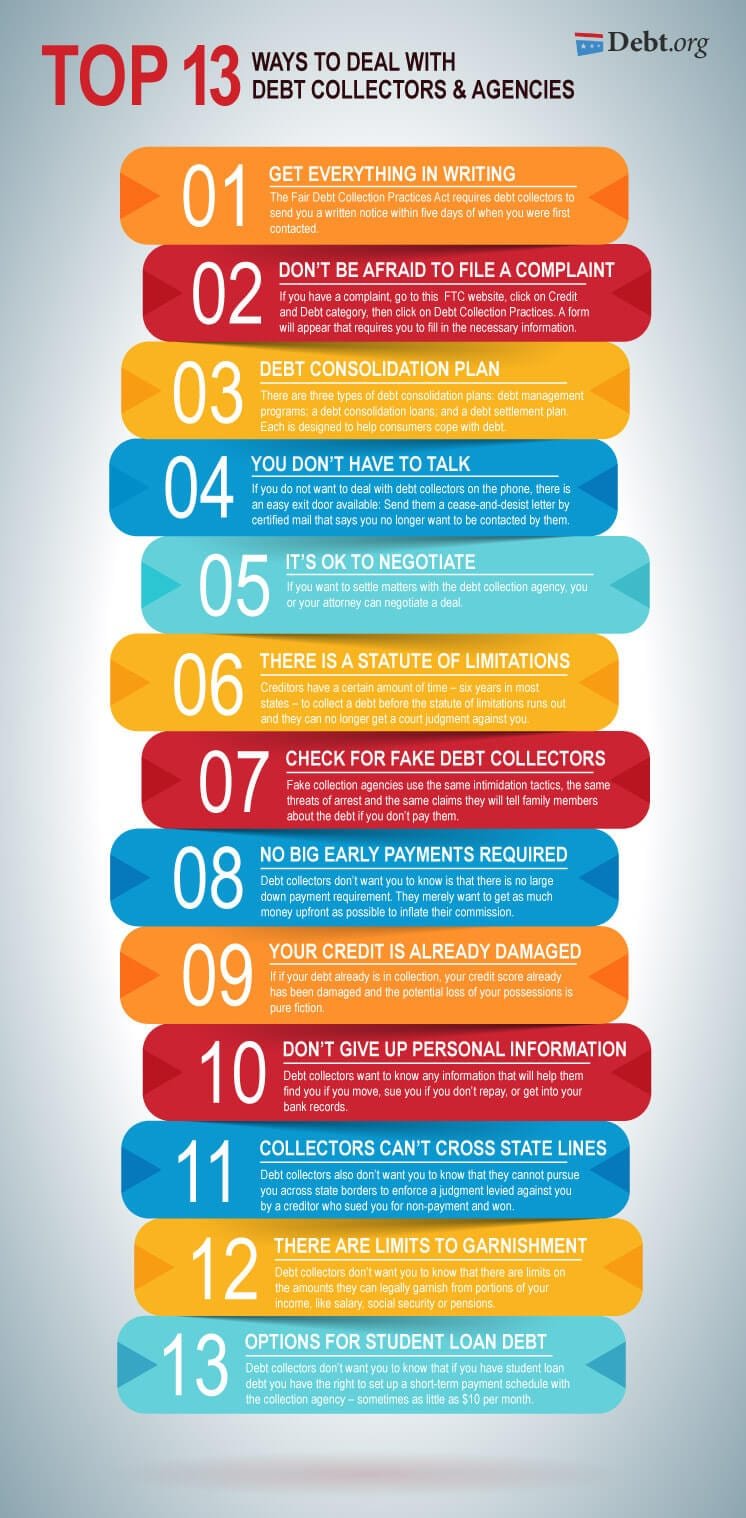
Your Rights When Dealing With Debt Collectors
One of the biggest mistakes people make is assuming collectors can do anything they want. They can’t.
Debt Collectors Generally CANNOT:
- Harass or threaten you
- Call you excessively
- Use obscene or abusive language
- Lie about legal action
- Pretend to be law enforcement
- Contact you at unreasonable hours
You are protected by consumer laws designed to prevent abuse.
What Debt Collectors ARE Allowed to Do
Collectors may:
- Contact you to request payment
- Report legitimate debts to credit bureaus
- Attempt to negotiate settlements
- File lawsuits (if legally valid and within limits)
Understanding this distinction reduces fear and confusion.
The Importance of Debt Validation
What Is Debt Validation?
You have the right to request proof that the debt is real and belongs to you.
A validation request typically asks for:
- Original creditor name
- Amount owed
- Documentation proving the debt
Why This Matters
- Many collectors lack full documentation
- Errors are common
- Some debts are past legal limits
Never assume a collector’s claim is automatically valid.
Statute of Limitations: A Critical Concept
Every debt has a statute of limitations, meaning there is a time limit for legal action.
Key points
- Time limits vary by debt type and location
- Once expired, collectors may still ask—but cannot sue
- Making payments can restart the clock
Knowing this can prevent costly mistakes.
Common Debt Collector Tactics (and How to Respond)
Tactic 1: Urgency and Fear
“We’re taking legal action immediately.”
How to respond:
Ask for written confirmation and validation.
Tactic 2: Emotional Pressure
“This will ruin your life/credit.”
How to respond:
Stay calm. Ask questions. Don’t agree verbally.
Tactic 3: Partial Payment Traps
“Just pay a little now.”
How to respond:
Understand that small payments may reset legal timelines.
What NOT to Say to a Debt Collector
Avoid:
- Admitting the debt immediately
- Agreeing to payments you can’t afford
- Giving banking details too soon
- Reacting emotionally
Silence and documentation are often more powerful than words.

Negotiating With Debt Collectors
Negotiation is common—and expected.
Settlement Options
- Lump-sum settlement (often 30–60% of balance)
- Payment plans
- Pay-for-delete agreements (where possible)
Golden Rule
👉 Get everything in writing before paying anything.
Debt Collectors and Your Credit Report
Collections can:
- Lower your credit score
- Remain on reports for years
However:
- Errors can be disputed
- Paid collections may impact less over time
Monitoring your credit report is essential.
Common Mistakes People Make With Debt Collectors
- Ignoring all communication
- Panicking and paying without verification
- Making promises they can’t keep
- Restarting old debts unknowingly
- Not keeping records
Mistakes often cost more than the debt itself.
When Debt Collectors Sue
Collectors may sue if:
- Debt is valid
- Statute of limitations hasn’t expired
- Amount is worth pursuing
Important
Never ignore a court summons.
Failing to respond can result in default judgments.
Dealing With Debt Stress and Anxiety
Debt collection affects mental health.
Healthy approaches
- Separate emotion from action
- Educate yourself
- Seek professional advice if needed
Fear decreases when knowledge increases.
Debt Management vs. Debt Settlement vs. Bankruptcy
Debt Management
- Structured repayment
- Often through counseling agencies
Debt Settlement
- Negotiated reductions
- Potential credit impact
Bankruptcy
- Legal reset in extreme cases
- Serious long-term consequences
Each option has trade-offs—choose based on facts, not fear.
How to Rebuild After Debt Collection
Rebuilding is possible.
Steps include
- Paying or settling debts strategically
- Building emergency savings
- Using credit responsibly
- Monitoring credit reports regularly
Many people recover stronger and more disciplined.
Preventing Future Debt Problems
- Live below your means
- Track expenses
- Avoid high-interest borrowing
- Build an emergency fund
- Use credit intentionally
Prevention is easier than recovery.
The Power Shift: From Fear to Control
Debt collectors rely on:
- Lack of knowledge
- Emotional reactions
- Urgency
Once you understand your rights and options, the balance of power shifts back to you.
Final Thoughts
Your debts do not define you—and debt collectors do not control you.
They are part of a system that operates on rules, timelines, and documentation. When you understand those rules, fear loses its grip.
The goal is not just to “get rid of debt,” but to:
- Protect yourself
- Make informed decisions
- Regain financial stability
- Move forward with confidence
Knowledge is leverage.
Calm is strength.
And control always begins with understanding.
Summary:
You are responsible for your debts. If you fall behind in paying your creditors, or if an error is made on your account, you may be contacted by a �debt collector.� A debt collector is any person, other than the creditor, who regularly collects debts owed to others, including lawyers who collect debts on a regular basis. You have the right to be treated fairly by debt collectors.
Keywords:
credit, information, collectors, counseling, debt collectors, debt, debt, credit counseling, report, problems, work, debts
Article Body:
The Fair Debt Collection Practices Act (FDCPA) applies to personal, family, and household debts. This includes money you owe for the purchase of a car, for medical care, or for charge accounts. The FDCPA prohibits debt collectors from engaging in unfair, deceptive, or abusive practices while collecting these debts. Under the Fair Debt Collection Practices Act:
-Debt collectors may contact you only between 8 a.m. and 9 p.m.
-Debt collectors may not contact you at work if they know your employer disapproves.
-Debt collectors may not harass, oppress, or abuse you.
-Debt collectors may not lie when collecting debts, such as falsely implying that you have committed a crime.
-Debt collectors must identify themselves to you on the phone.
-Debt collectors must stop contacting you if you ask them to do so in writing.
Solving Your Credit Problems
Your credit report can influence your purchasing power, as well as your opportunity to get a job, rent or buy an apartment or a house, and buy insurance. When negative information in your report is accurate, only the passage of time can assure its removal. A consumer reporting company can report most accurate negative information for seven years and bankruptcy information for 10 years. Information about an unpaid judgment against you can be reported for seven years or until the statute of limitations runs out, whichever is longer. There is no time limit on reporting information about criminal convictions; information reported in response to your application for a job that pays more than $75,000 a year; and information reported because you�ve applied for more than $150,000 worth of credit or life insurance. There is a standard method for calculating the seven-year reporting period. Generally, the period runs from the date that the event took place.
If you are having problems paying your bills, contact your creditors immediately. Try to work out a modified payment plan with them that reduces your payments to a more manageable level. Don�t wait until your account has been turned over to a debt collector.
Here are some additional tips for solving credit problems:
-If you want to dispute a credit report, bill or credit denial, write to the appropriate company and send your letter �return receipt requested.�
-When you dispute a billing error, include your name, account number, the dollar amount in question, and the reason you believe the bill is wrong.
-If in doubt, request written verification of a debt.
-Keep all your original documents, especially receipts, sales slips, and billing statements. You will need them if you dispute a credit bill or report. Send copies only. It may take more than one letter to correct a problem.-Be skeptical of businesses that offer instant solutions to credit problems: There aren�t any.
-Be persistent. Resolving credit problems can take time and patience.
-There is nothing that a credit repair company can charge you for that you cannot do for yourself for little or no cost.
If youre not disciplined enough to create a workable budget and stick to it, work out a repayment plan with your creditors, or keep track of mounting bills, consider contacting a credit counseling organization. Many credit counseling organizations are nonprofit and work with you to solve your financial problems. But not all are reputable. For example, just because an organization says it�s �nonprofit,� there�s no guarantee that its services are free, affordable, or even legitimate. In fact, some credit counseling organizations charge high fees, or hide their fees by pressuring consumers to make �voluntary� contributions that only cause more debt.
Most credit counselors offer services through local offices, the Internet, or on the telephone. If possible, find an organization that offers in-person counseling. Many universities, military bases, credit unions, housing authorities, and branches of the U.S. Cooperative Extension Service operate nonprofit credit counseling programs. Your financial institution, local consumer protection agency, and friends and family also may be good sources of information and referrals.
Reputable credit counseling organizations can advise you on managing your money and debts, help you develop a budget, and offer free educational materials and workshops. Their counselors are certified and trained in the areas of consumer credit, money and debt management, and budgeting.
Counselors discuss your entire financial situation with you, and help you develop a personalized plan to solve your money problems. An initial counseling session typically lasts an hour, with an offer of follow-up sessions.




Tinggalkan Balasan